
HVAC Frequently Asked Questions
We know that HVAC decisions can feel overwhelming, especially when you're not sure who to trust or where to start. This page answers the questions we hear most often from homeowners and property managers across the Wasatch Front, from West Jordan and Sandy to Heber, Kamas, and the surrounding mountain communities.
Knowledge and Honesty First
Your Questions, Answered Straight
How often should I have my HVAC system serviced?
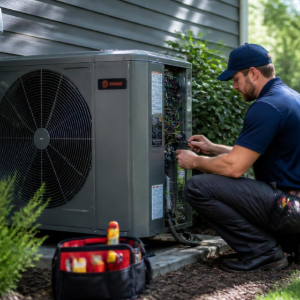
For most homes on the Wasatch Front, we recommend servicing your heating system every fall before the first hard freeze and your cooling system every spring before the summer heat peaks. That means two visits per year as a baseline. If your home is in a higher-elevation area like Heber or Kamas, where systems face more extreme temperature swings and heavier seasonal cycling, staying on that schedule is especially important. Regular maintenance catches small issues before they become expensive failures and keeps your equipment running efficiently, which shows up directly on your monthly utility bills.When should I replace my furnace instead of repairing it?
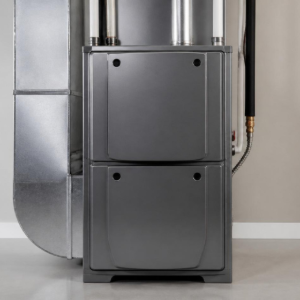
The answer depends on the age of the unit, the cost of the repair, and how efficiently it's running. As a general rule, if your furnace is more than 15 to 20 years old and the repair cost is approaching half the price of a new system, replacement usually makes more financial sense. We always give you an honest, no-pressure assessment of both options. In some cases, keeping your existing equipment running is the right call. We'll explain the reasoning clearly so you can make the decision that fits your home and your budget, not the one that's easiest for us.What are some basic air conditioning maintenance tips I can do myself?
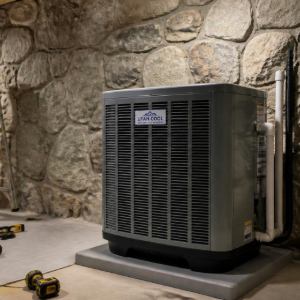
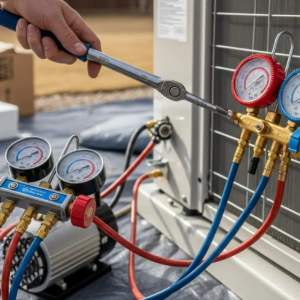
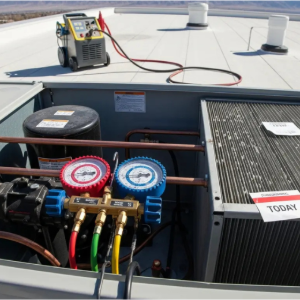
A few simple habits go a long way. Change your air filter at minimum every three months, and more often if you have pets or live near a dusty canyon road. Keep the area around your outdoor condenser unit clear of debris, weeds, and overgrowth, and make sure indoor vents aren't blocked by furniture. Beyond that, a professional coil cleaning and refrigerant check before summer is the most effective step you can take. In Utah's dry climate, dust buildup on coils is a common cause of systems freezing up or losing efficiency mid-July.Why does my upstairs stay hot even when the AC is running?
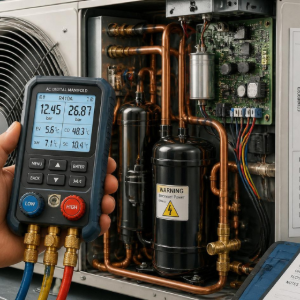
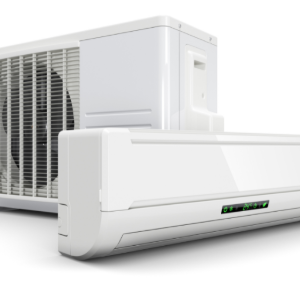
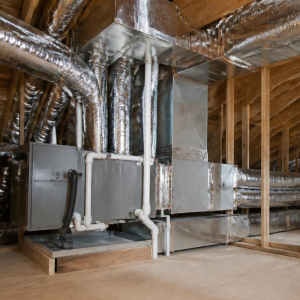
This is one of the most common complaints we hear, particularly from owners of ranch-style and split-level homes in Sandy, Draper, and the South Jordan area. The usual causes are an undersized system, ductwork that wasn't balanced for multi-level airflow, or a unit that was never properly sized for your home's actual load. In some cases, a ductless mini-split for the upper level is the most cost-effective fix. We test ductwork, refrigerant levels, and electrical components before recommending anything, so you get a real diagnosis rather than a guess.How do HVAC systems perform differently at high elevations like Heber or Kamas?
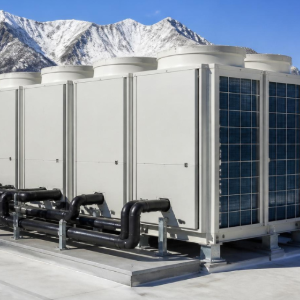
At elevations above 5,800 feet, the air is thinner, which affects how refrigerant behaves and how hard your blower motor has to work. A system sized for a valley home will often underperform in a mountain climate. Outdoor units are also exposed to heavier snow loads and more severe freeze cycles. This is why proper load calculations matter so much for homes near the Jordanelle Reservoir, Mirror Lake Highway, and throughout Kamas Valley. We specialize in altitude-rated equipment and mountain climate sizing, which is something many contractors from lower-elevation areas simply don't account for.Are high-efficiency systems actually worth the higher upfront cost?
In most cases, yes, especially in Utah where heating and cooling demands are high. A properly sized high-efficiency furnace or air conditioner will reduce your monthly utility bills, and in many cases the savings add up quickly. Utility rebates are often available for qualifying high-efficiency equipment, and we handle all of the rebate paperwork and permit coordination for you. One of our customers saved $8,000 compared to a competitor's bid while getting a higher-efficiency system. That kind of outcome is what we work toward on every job.What does a furnace tune-up actually include?
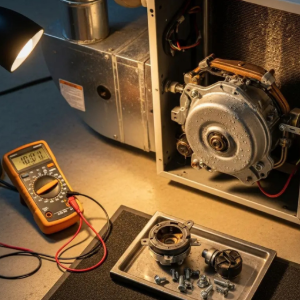
Our fall tune-ups go well beyond a quick visual check. We inspect the heat exchanger, test electrical components, check the blower motor, verify the pilot light and ignition system, and run a full safety check. Heat exchanger cracks are a genuine safety hazard that can go undetected for years, and they're something home inspectors often miss. We document what we find and walk you through the results in plain language before we leave. The goal is to make sure your system is safe, efficient, and ready for whatever the Utah winter brings.Do you handle permits and rebates, or is that something I need to manage?
We take care of both. Permit coordination with your municipality and rebate processing with utility providers are things we manage on your behalf on every installation project. Many homeowners don't realize that unpermitted HVAC work can create problems when selling a home or filing an insurance claim, so having that handled correctly from the start matters. On the rebate side, qualifying high-efficiency equipment can come with meaningful incentives, and we make sure you capture every dollar you're entitled to without having to chase down paperwork yourself.
Still have questions? We're here to help — contact us today or give us a call!